Overview
Systems integration and AI for retailers and consumer brands
A retailer's customer experience depends on systems that were rarely designed to work together: the ecommerce platform, point of sale, ERP for stock and pricing, a PIM for product data, a DAM for images and video, CRM and loyalty, marketing automation and the service desk. When they don't share data, teams re-key products, campaigns go out with the wrong images, stock is wrong online, and customers repeat themselves to every channel.
Great Minds is a Sydney-based systems integrator, the integrator for the gaps between platforms. For retailers that means connecting Shopify Plus or Adobe Commerce to the ERP, Akeneo for product data, Bynder or AEM Assets for media, Salesforce or Microsoft Dynamics 365 for customers, and Klaviyo for email and SMS, where we're a Klaviyo Gold Advisor.
AI comes after the plumbing, not before it. Once data flows cleanly, AI agents can take on retail work that's high-volume and checkable: mapping and enriching supplier product data, drafting product copy for review, tagging images, triaging customer enquiries and preparing campaign segments. We work with Australian mid-market retailers and brands, many selling in several countries, and our teams in Sydney, Singapore, Milan and Madrid support multi-market rollouts.

Capabilities
Retail services we deliver
We work alongside CIOs, CMOs and COOs on four kinds of retail work, as separate projects or one program. Each starts by agreeing which system owns products, prices, stock, customers and orders.
How we deliver
A retail program, from audit to rollout
We map your systems, data flows, manual workarounds and channels, and identify where data breaks between them. You get a target architecture, a prioritised roadmap and a price.
Data ownership, integration design, and the AI use cases worth doing first, agreed with merchandising, marketing, ecommerce, operations and IT before build starts.
Integrations, platform configuration, data migration and agents, tested with real products, orders and customers. AI agents do much of the repetitive mapping and checking; our consultants own the design and sign off every change.
A staged rollout by brand, channel or market, avoiding peak trading periods, with training and hypercare. Then we measure results and extend to the next markets or use cases.
Australian considerations
What Australian retailers need to check
Customer, loyalty and order data is personal information under the Privacy Act. From 10 December 2026, if software makes or substantially helps make decisions that significantly affect customers, your privacy policy must say so. In retail, automated refund approvals and fraud flags that suspend accounts are likely to be in scope, and personalised pricing or offer eligibility may be, depending on how significant the difference is. Our guide to automated decisions and the Privacy Act has a triage table.
Email and SMS marketing must follow the Spam Act 2003: consent, sender identification and an unsubscribe honoured within five working days. Check where each commerce, marketing and AI platform processes customer data, because APP 8 applies to overseas disclosure. Online stores are also covered by the Disability Discrimination Act 1992, and the Australian Human Rights Commission points to WCAG as the benchmark for accessible websites.
FAQ
Retail AI and integration questions
Where should a retailer start with AI?
With a process that's high-volume, repetitive and easy to check, and whose data is already reliable: product data enrichment, image tagging, enquiry triage or campaign reporting. If product or customer data is scattered across systems, fix the integration first, because agents move bad data faster.
Do we need both a PIM and a DAM?
Usually, once you sell across several channels. A PIM manages product data such as attributes, descriptions and translations; a DAM manages images, video and their usage rights. Linked together, each product record points to the right approved assets. Our PIM and DAM pages explain when each is worth it.
Can AI agents enrich our product data?
Yes, with review. Agents can map supplier data to your attribute model, draft descriptions, suggest categories and flag incomplete records, while merchandisers approve before anything is published. Our article on agentic AI in PIM integration covers the patterns.
Can you connect our ecommerce platform to the ERP and point of sale?
Yes. We integrate commerce platforms such as Shopify Plus and Adobe Commerce with ERP and POS systems through their APIs, so stock, prices and orders stay in step. We design which system owns each piece of data and how conflicts are resolved before building.
Do the Privacy Act's automated decision rules affect retailers?
Often, yes. Automated refund approvals, fraud rules that suspend accounts and some personalised pricing or offer decisions can significantly affect customers. From 10 December 2026, the kinds of decisions and the personal information used must be described in your privacy policy, including decisions made by vendor platforms you've switched on.
Can you support rollouts outside Australia?
Yes. Great Minds has offices in Sydney, Singapore, Milan and Madrid. For a global sportswear and fashion retailer present in more than 20 countries, we migrated more than 300,000 creative assets into one DAM with regional permissions.
Case studies
Retail work from our case studies
Our retail work includes segmented, personalised email for Myer reaching more than 1.4 million recipients, and one asset library for a global retailer in more than 20 countries.
 One asset library for APAC, EMEA and North AmericaModernising creative storage and operations for a global retailerEnabling global brand consistency through enterprise Digital Asset Management
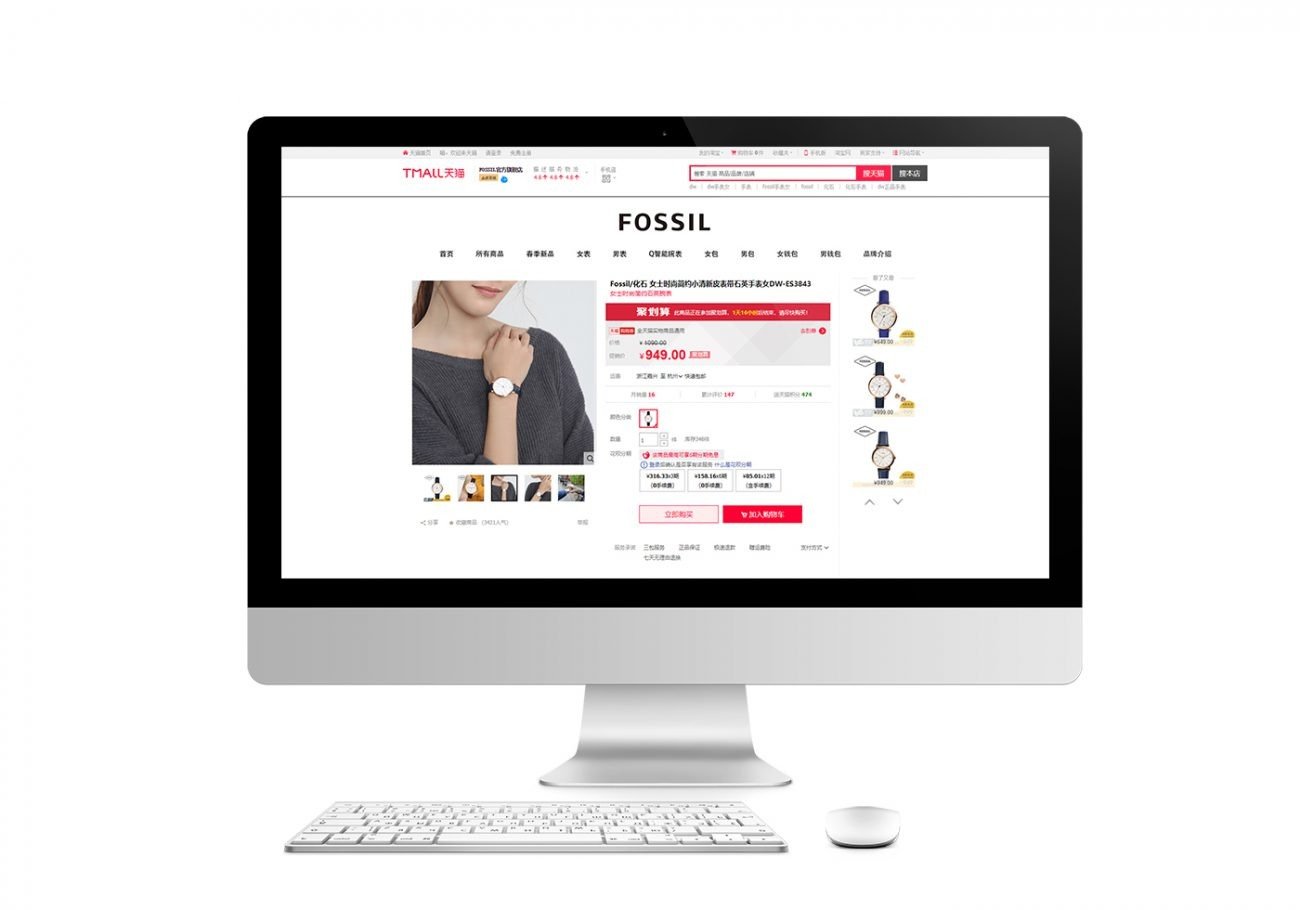 2,500+ localised assets for China online platformsLocalised content operations for Fossil's China online business2,500+ localised content assets for Fossil's online platforms across APAC, produced through a workflow built for brand consistency and speed.
 Segmented, personalised email for 1.4M+ recipientsSegmented, personalised email for 1.4M+ Myer customersMyer brought us in to fix segmentation and personalisation in an email programme reaching 1.4M+ recipients, with 11.2M+ emails sent.