
Overview
What a customer data platform does, and where Great Minds fits
A customer data platform (CDP) collects customer data from your CRM, ecommerce, booking, web and app analytics, service desk and marketing tools, resolves it into one profile per person, and makes segments and attributes available to the channels that act on them: email and SMS, advertising, websites, service consoles and, increasingly, AI agents. A CRM is built around people managing relationships; a CDP is built for high volumes of behavioural events and fast activation.
Great Minds is a Sydney-based systems integrator. We help marketing, data and technology teams decide whether they need a CDP at all, choose between platforms such as Adobe Real-Time CDP, Salesforce Data 360 (formerly Data Cloud) and Microsoft Dynamics 365 Customer Insights, implement it, and build the integrations in and out. We're a Klaviyo Gold Advisor, and for direct-to-consumer brands Klaviyo's own profile store often does the job a separate CDP would.
A CDP is one way to deliver a single customer view. If you're still deciding which system should hold the customer profile, start there.

Capabilities
What a CDP project covers
Most CDP programs stall on identity rules and consent, not on the software. We cover four linked pieces of work. We can run them as one program or join after you've chosen a platform.
 01Customer data integration and unificationConnecting CRM, ecommerce, booking, service and analytics sources, then writing the match and reconciliation rules that decide which records are the same person and which value wins.
 02Segmentation and activationSegments and attributes sent to email, SMS, advertising, web personalisation and service consoles. Real-time pipes are kept for use cases that need seconds, such as abandoned carts.
 03Journeys and measurementJourneys mapped against the data each step needs, with baseline metrics such as duplicate rate, unsubscribe time and revenue per contact agreed before launch, so you can show what changed.
 04Privacy, consent and governanceConsent by channel and purpose stored as data, with access controls, retention rules and audit logs, so an opt-out or deletion request reaches every connected system.
Partnerships
CDP platforms we implement and connect
We implement Adobe Real-Time CDP, Salesforce Data 360 and Klaviyo, and connect them to Salesforce, Microsoft, Atlassian and commerce platforms. The right one usually depends on where your best customer data already sits.
 Adobe Real-Time CDPAdobe's CDP on Experience Platform: real-time profiles, identity graphs and audiences for Adobe and other channels. Experience Platform offers an Australian region.
 Salesforce data 360Salesforce's data platform, formerly Data Cloud. It unifies customer data for use across Salesforce and, through Zero Copy, can query warehouses such as Snowflake without copying the data.
 KlaviyoCustomer profiles, segmentation, email, SMS and flows in one platform, often enough for ecommerce brands. Great Minds is a Klaviyo Gold Advisor.
How we deliver
A CDP program, from source inventory to first use case
We list every customer data source, the identifiers and consent records each holds, and score data quality. Then we agree the first two or three use cases with marketing, service and data owners. You get a business case with baseline metrics and a recommendation on the pattern that fits: CRM as the hub, a packaged CDP, your marketing platform's profile store, or a warehouse-native setup.
A one-page match policy naming the identifiers you trust and in what order, the reconciliation rules, the consent model by channel and purpose, the data model, and every integration in and out. Your business owners approve the identity rules, because a bad merge is a customer problem, not a technical one.
Connectors, ingestion, identity rules and the first activations, tested on a sample of real records with merges reviewed by hand before the rules run on the full database. AI agents do much of the repetitive mapping and data checking; our consultants own the design and sign off every change.
The first use case goes live and its metrics are measured against the baseline. Then we add sources such as service, booking or billing data, and more channels. When we moved Meriton Suites from Salesforce Marketing Cloud to Klaviyo, more than 1 million contacts were migrated with their consent data, engagement history and segmentation attributes intact.
Australian considerations
What Australian organisations need to check
A CDP concentrates personal information, so the Australian Privacy Principles apply directly. APP 10 requires reasonable steps to keep personal information accurate, up to date and complete. APP 11 requires you to protect it and to destroy or de-identify it once it's no longer needed, which argues against loading every field from every system just in case. If the platform hosts profiles overseas, APP 8 on cross-border disclosure applies. Adobe Experience Platform lists an Australian region (AUS5, in New South Wales, on Microsoft Azure); for any platform, confirm the hosting region for your plan in the contract.
Consent has to travel with the profile. The ACMA's guidance under the Spam Act is that every commercial email or SMS must include an unsubscribe option that's honoured within 5 working days, and you should keep records of consent. When a CDP feeds several sending tools, an opt-out captured in one must reach all of them in time.
If CDP segments drive pricing, eligibility or service decisions that significantly affect people, the Privacy Act's automated decision rules apply from 10 December 2026: your privacy policy must say so. Our guide to automated decisions and the Privacy Act explains which uses are likely to be caught.
FAQ
Customer data platform questions
What's the difference between a CDP and a CRM?
A CRM such as Salesforce Sales Cloud or Dynamics 365 Sales is where your people manage relationships, opportunities and cases. A CDP collects behavioural and transactional data from many systems at high volume, resolves identities and pushes segments to channels. Many organisations run both, with the CRM as one of the CDP's sources and one of its destinations. See our CRM capability.
Do we need a CDP to have a single customer view?
No. A CRM, a marketing platform's profile store or a well-modelled data warehouse can host a single customer view, especially with a handful of sources and limited real-time needs. A CDP earns its cost when you have many sources, high event volumes and several channels to activate quickly.
Which CDP should we choose?
Start from where your data and teams already are. Organisations on Adobe Experience Cloud usually look at Real-Time CDP; Salesforce customers at Data 360; Microsoft customers at Dynamics 365 Customer Insights. Ecommerce brands often find Klaviyo's profiles are enough. Organisations with a strong data team and warehouse may prefer a warehouse-native approach.
Can our customer data stay in Australia?
It depends on the platform and plan. Adobe Experience Platform offers an Australian region, and Salesforce runs Hyperforce on AWS in Australia, though Salesforce notes its Einstein AI features can process data outside the country. Klaviyo and other platforms may host offshore. We check each platform's hosting and sub-processor documentation as part of selection.
Can AI agents use the data in our CDP?
Yes, and a governed profile is usually what makes customer-facing agents useful. Give each agent only the profile fields its task needs, through the same access controls your staff use, and log which data it used, so you can explain a decision if a customer or regulator asks. Our agentic AI page covers how we build them.
People
Customer data consultants, architects and marketing technologists
Our CDP consultants and solution architects work across marketing, data and technology teams. They write the identity and consent rules with your business owners, build the integrations and stay accountable for the result, with AI agents handling repetitive mapping and data checks.
Case studies
Customer data in practice
For Meriton Suites we migrated more than 1 million contacts from Salesforce Marketing Cloud to Klaviyo, keeping consent data and engagement history, and connected their ecommerce environment for real-time behavioural triggers.
 4x faster campaign execution, 1M+ contacts migratedSalesforce Marketing Cloud to Klaviyo migration with 1M+ email marketing recipientsUnlocking personalised growth at scale through Klaviyo implementation and data migration
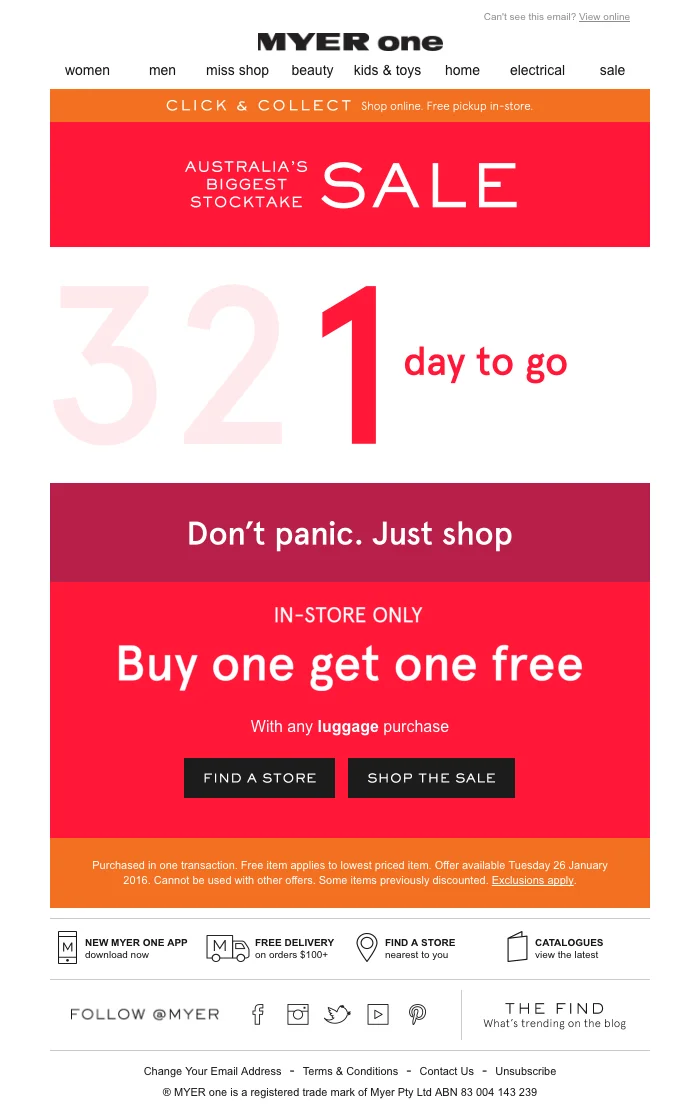 Segmented, personalised email for 1.4M+ recipientsSegmented, personalised email for 1.4M+ Myer customersMyer brought us in to fix segmentation and personalisation in an email programme reaching 1.4M+ recipients, with 11.2M+ emails sent.
 One asset library for APAC, EMEA and North AmericaModernising creative storage and operations for a global retailerEnabling global brand consistency through enterprise Digital Asset Management
Insights
Guides to customer data and privacy
 What is a CDP (customer data platform)? How it differs from a CRMA CDP unifies customer data from every system into one profile other tools can use.
 Migrating from Salesforce Marketing Cloud to Klaviyo: lessons from 1M+ contactsHow to move from Salesforce Marketing Cloud to Klaviyo: what the integration moves, Spam Act consent, active-profile costs, warming and cutover.
 Klaviyo and Shopify Plus for Australian retailers: data flows that hold up at peak seasonThe Klaviyo and Shopify Plus data flows that fail at Black Friday: webhooks, consent, catalog sync, API limits, sending volume and Australian spam rules.