

Overview
Adobe Commerce and Magento consulting for Australian retailers and B2B sellers
Adobe Commerce is the commercial edition of Magento, Adobe's ecommerce platform for selling to consumers and to businesses. It handles the catalogue, pricing, promotions, checkout, customer accounts and orders, and it is extended with modules and APIs. Magento Open Source is the free edition built on the same code. Adobe Commerce can be self-hosted, run on Adobe's managed cloud infrastructure, or bought as Adobe Commerce as a Cloud Service, a software-as-a-service edition where Adobe runs the infrastructure, patching and upgrades.
Most of the merchants who come to us are already on Magento 2 or Adobe Commerce. They need to upgrade before their version loses support, decide whether to move to the cloud service, or fix a store that was never properly connected to the systems around it. Others are B2B sellers that want trade customers to order online with their own accounts, catalogues and prices instead of by email and phone.
Great Minds is a Sydney-based systems integrator for the gaps between platforms, and on commerce projects those gaps are where most of the cost sits: stock and orders re-keyed between the store and the ERP, product data maintained in spreadsheets, and customer data that never reaches the CRM or email platform. We plan upgrades and re-platforms, and we design and build the integrations so each system owns its own data.
If you're also weighing a hosted platform, our Shopify Plus page covers that option, and our retail solutions page covers the wider retail stack.
Capabilities
What we deliver on Adobe Commerce
Every Adobe Commerce engagement starts from the version, hosting and code you have today. These are the pieces most projects include. For connections from Commerce to Adobe Experience Manager and other Adobe products, see our Adobe integration page.
How we deliver
An Adobe Commerce project, from audit to cut-over
We work in four stages. The first is short and fixed-price where possible, because the audit decides whether the rest of the project is an upgrade, a re-platform or a smaller fix.
Version, hosting, extensions, custom code, integrations, and the traffic and rankings that must be protected. We tell you plainly whether to upgrade, re-platform or leave the store as it is for now.
Upgrade in place, move to Adobe Commerce as a Cloud Service, or move to another platform. We compare effort, running cost and risk for each option before you commit to one.
Extensions replaced or rebuilt, data migrated in repeated test runs, and ERP, PIM and payment integrations tested end to end with real order scenarios in a staging store.
A staged cut-over in a quiet trading window, close monitoring of orders and payments in the first weeks, and documentation your own team or support partner can work from.
Australian considerations
What Australian merchants should check
Support dates. Adobe gives each Adobe Commerce release three years of standard support. Standard support for 2.4.6 ended on 11 August 2026; it now has extended support until 31 August 2027 and security-only fixes until 31 May 2028. Standard support for 2.4.7 ends on 31 May 2027 (extended support to 31 May 2028), for 2.4.8 on 31 May 2028, and for 2.4.9, released in May 2026, on 31 May 2029. From 1 June 2027, Adobe says it will no longer maintain cloud environments running unsupported versions. Plan the upgrade around your peak trading periods, not just the deadline.
Prices and GST. Under the Australian Consumer Law, prices shown to consumers must include a single total price with GST and any other unavoidable charges, as the ACCC's price display guidance explains. B2B storefronts often show prices excluding GST, so we configure tax display separately for each customer group.
Card data and personal information. We use your payment provider's hosted payment fields so card numbers don't pass through your servers, which reduces your PCI DSS scope. Customer accounts and order history are personal information under the Privacy Act, so we limit what is copied into other systems. On Adobe's cloud infrastructure, integration environments must use US regions, so we test with dummy customer data rather than copies of production.
FAQ
Adobe Commerce questions
Is Adobe Commerce the same as Magento?
They share the same code. Adobe Commerce is the paid edition, with B2B features, Adobe hosting options and Adobe support. Magento Open Source is the free edition you host and support yourself. Both are built on Magento 2.
Our store runs Adobe Commerce 2.4.6 or earlier. What should we do?
Plan the upgrade now. Standard support for 2.4.6 has ended, and 2.4.4 and 2.4.5 are in their final security-only period, which ends on 31 May 2027. Moving to 2.4.8 or 2.4.9 gives you the longest supported runway. We start with an extension and custom code review, because that's where most upgrade effort sits.
Should we move to Adobe Commerce as a Cloud Service?
It depends on how much custom code your store runs. In the cloud service, Adobe runs the infrastructure and delivers updates continuously, with 30 days to test each one in a sandbox. The storefront is built on Adobe's Edge Delivery Services, the older Luma storefront isn't supported, and customisations are built outside the core with App Builder and API Mesh. Adobe calls it the recommended long-term destination for customers on its cloud infrastructure. Stores with heavy in-core customisation need that code rebuilt first.
We're still on Magento 1. Is it too late?
No, but treat it as a re-platform rather than an upgrade. Magento 1 stopped receiving security patches on 30 June 2020, so the store has been unpatched for years. Product, customer and order data can be migrated to Magento 2 or Adobe Commerce, but the theme and extensions have to be rebuilt or replaced. It's also the right moment to compare other platforms.
Can Adobe Commerce connect to our ERP and PIM?
Yes, through its REST and GraphQL APIs, usually with an integration layer in between so orders aren't lost if one system is down. We agree which system owns each piece of data first: typically the ERP for stock and prices, the PIM for product content and Commerce for orders. Our article on agentic AI in PIM integration covers how AI agents help with product data mapping.
How long does an upgrade or re-platform take?
It depends on the number of extensions, how much custom code there is, the integrations and how much data moves. A version upgrade on a well-kept store is a much smaller project than a re-platform from Magento 1. We give you a scoped plan and price after the audit.
Case studies
Commerce, content and accessibility projects
Related work from our retail and commerce clients: a global digital asset management rollout connected to ecommerce and campaign tools, accessibility work for a large online retailer, and localisation for Fossil in China.
 One asset library for APAC, EMEA and North AmericaModernising creative storage and operations for a global retailerEnabling global brand consistency through enterprise Digital Asset Management
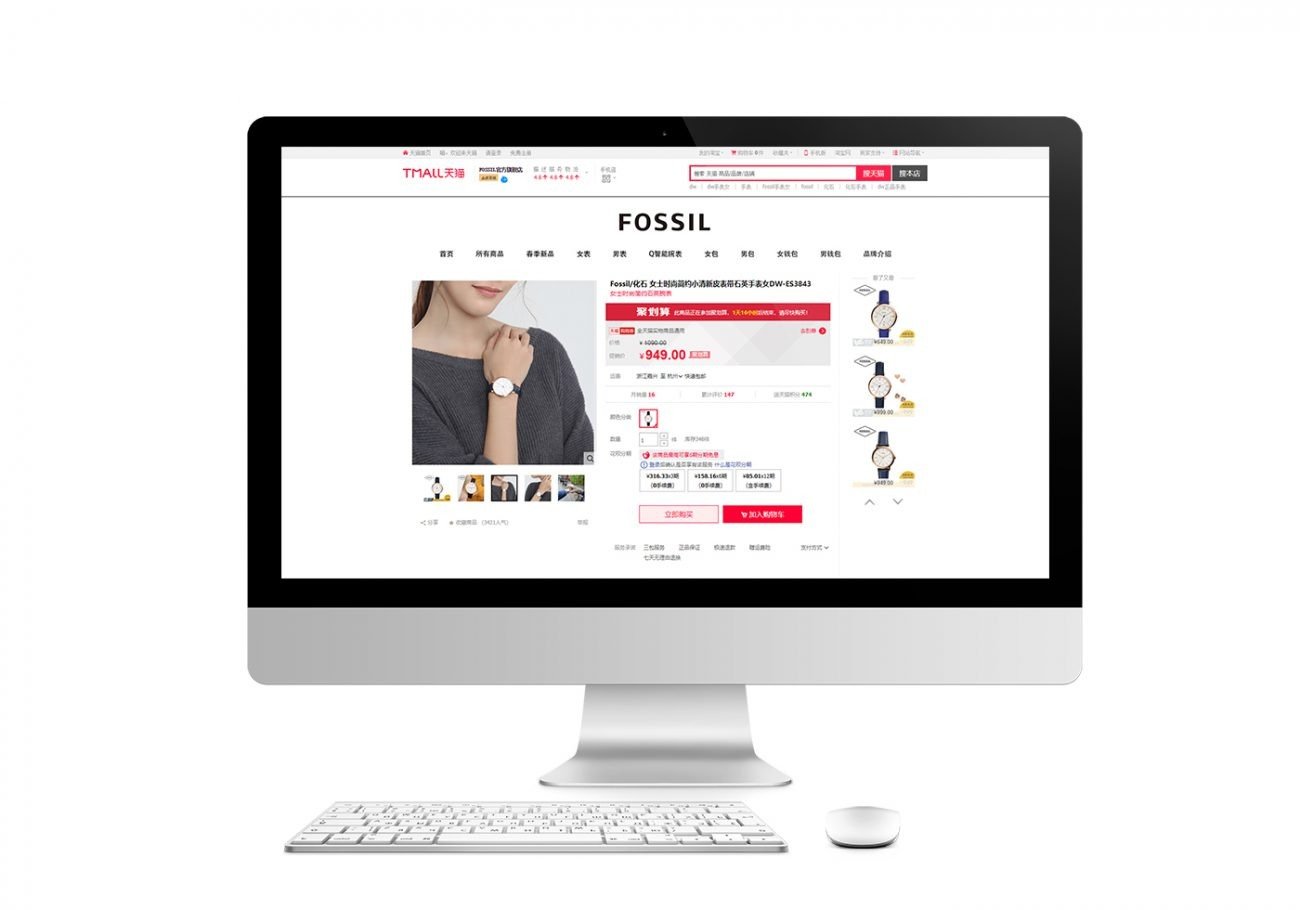 2,500+ localised assets for China online platformsLocalised content operations for Fossil's China online business2,500+ localised content assets for Fossil's online platforms across APAC, produced through a workflow built for brand consistency and speed.
 An accessibility programme to bring a global online store in line with WCAGWCAG compliance for eCommerce giantAccessibility audit, remediation and testing to bring a global online retailer's store in line with WCAG.
Insights
Reading on commerce, integration and platforms
 What changed in October 2026: Atlassian, Salesforce, Microsoft, Google and AdobeOctober 2026 changes for Australian IT: Atlassian Cloud price rises, Salesforce SOAP login() deadlines, Copilot licensing, Gemini data residency, OAIC.
 The connected enterprise: integrating Salesforce, Atlassian, Adobe and ERPHow to connect Salesforce, Atlassian, Adobe and your ERP: system-of-record map, architecture options, API limits, APP 8 and CPS 230, and where to start.
 Adobe AEM Assets vs Bynder: choosing an enterprise DAMAdobe AEM Assets vs Bynder compared by a team that has delivered both: best fit, strengths, integrations and the questions that decide which DAM suits you.